
Call us now :08045815294
 Send Inquiry
 Send Inquiry
Industrial CO2 Incubator
MOQ : 1 Unit
Industrial CO2 Incubator Specification
- Shape
- Rectangular
- Glass Type
- Toughened Glass Door
- Features
- CO2 concentration control, Humidity control, Automatic temperature regulation, Alarm system
- Accuracy
- 0.1C
- Heating Capacity
- Up to 500 W
- Control Type
- Microprocessor based PID controller
- Temperature Resistance
- Up to 60C
- Display Type
- Digital LCD Display
- Power Supply
- AC
- Type
- Industrial CO2 Incubator
- Dimension (L*W*H)
- 565 mm 680 mm 830 mm
- Equipment Type
- Incubator
- Equipment Materials
- Powder coated mild steel body with stainless steel inner chamber
- Power
- 230 V, 50 Hz
- Voltage
- 220-240 V
- Material
- Stainless Steel (Inner) / Powder Coated Steel (Outer)
- Application
- Cell culture, Microbiology, Biotechnology, Pharmaceutical research
- Capacity (Ltr)
- 150 Liters
- Door Design
- Double-layer glass door with magnetic seal
- Temperature Range
- Ambient +5°C to 60°C
- CO2 Control Accuracy
- ±0.1% CO2
- Weight
- 70 kg
- Interior Shelves
- Adjustable stainless steel shelves
- Humidity Range
- Ambient to 95% RH
- Noise Level
- < 50 dB
- Safety Functions
- Over-temperature protection, Door open alarm
- Protocol Interface
- RS-232/485 ports for data logging
- CO2 Sensor Type
- Infrared (IR) sensor
- Chamber Air Circulation
- Forced convection fan
Industrial CO2 Incubator Trade Information
- Minimum Order Quantity
- 1 Unit
- Supply Ability
- 10 Units Per Week
- Delivery Time
- 4 Days
- Sample Available
- Yes
- Sample Policy
- Contact us for information regarding our sample policy
- Packaging Details
- IF REQUIRED
- Main Domestic Market
- Maharashtra
About Industrial CO2 Incubator
With sincere efforts and client centric approach, our company has been engaged in manufacturing and supplying supreme grade CO2 Incubator. The offered incubator is manufactured under the supervision of deft professionals using excellent quality components with the aid of advanced techniques. The provided incubator is widely used in laboratories and research centers for maintaining microbiological cultures. Made available in different specifications, this CO2 Incubator can be purchased at reasonable prices from us.
Key points:
- Smooth operations
- Aids in providing maintained temperature
- Longer life
- Power efficient
Precision Engineering and Robust Performance
This industrial-grade CO2 incubator delivers exceptional temperature, humidity, and CO2 uniformity, thanks to its advanced microprocessor-based PID controller and high-accuracy IR CO2 sensor. Engineered with a forced convection air system, it ensures consistent conditions for sensitive applications in cell culture and biotechnology labs. Durable materials and intelligent alarms enhance operational reliability and protection.
Flexible and User-Friendly Design
Equipped with adjustable stainless steel shelves, digital LCD display, and a double-layer toughened glass door, this incubator emphasizes practicality and monitoring ease. Its user-centric design allows for efficient access, secure door locking, and minimized contamination, making it suitable for various industrial research applications and high-throughput environments.
Comprehensive Safety and Data Management
An advanced alarm system protects samples against over-temperature and door-open events. The unit also features RS-232/485 protocol interfaces for seamless data logging and integration into laboratory information systems, facilitating traceability and compliance for regulated industries and research institutions.
FAQs of Industrial CO2 Incubator:
Q: How does the industrial CO2 incubator maintain accurate temperature and CO2 levels?
A: The incubator uses a microprocessor-based PID controller and a precision infrared (IR) CO2 sensor to sustain temperature within 0.1C and CO2 levels within 0.1%. Forced convection air circulation ensures uniform distribution, supporting optimal cell culture and research results.Q: What applications are suitable for this CO2 incubator in industrial and research settings?
A: This incubator is ideal for cell culture, microbiology, biotechnology, and pharmaceutical research, where precise control of temperature, humidity, and CO2 is crucial for reproducibility and experimental integrity.Q: When should safety alarms, such as over-temperature protection and door open alarms, be expected to activate?
A: Safety alarms activate immediately when set parameterslike temperature or door closureare breached to prevent sample loss or contamination, giving researchers confidence in continuous operation.Q: Where can data from the incubator be logged or transferred?
A: Data can be recorded or transferred through RS-232/485 protocol ports, enabling integration with data logging systems for traceability, monitoring, and regulatory compliance in laboratory and industrial environments.Q: What is the process for adjusting humidity and CO2 levels inside the chamber?
A: The incubator facilitates easy digital configuration of required humidity and CO2 concentration through the LCD control panel. Sensors and automated controls maintain user-set values throughout the operation.Q: How does the double-layer toughened glass door benefit daily usage?
A: The doors double-layer toughened glass and magnetic seal offer excellent thermal insulation, minimize humidity and CO2 fluctuations, and allow unobstructed viewing of samples, thereby reducing contamination risks and maintaining stable conditions.Q: What are the advantages of using stainless steel interiors and powder coated steel exteriors?
A: Stainless steel interiors support easy cleaning, corrosion resistance, and long-term durability, while the powder coated mild steel exterior enhances mechanical strength, maintaining structural integrity even in rigorous laboratory environments.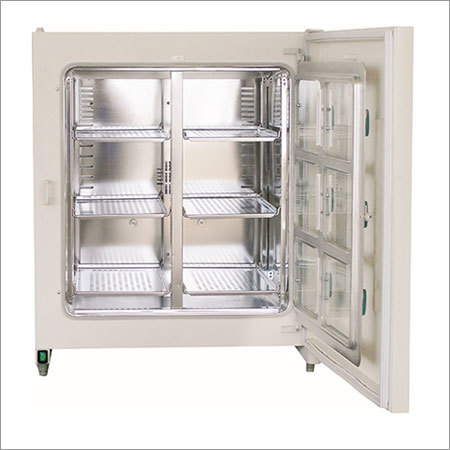
Tell us about your requirement

Price:
Quantity
Select Unit
- 50
- 100
- 200
- 250
- 500
- 1000+
Additional detail
Mobile number
Email

More Products in CO2 Incubator Category
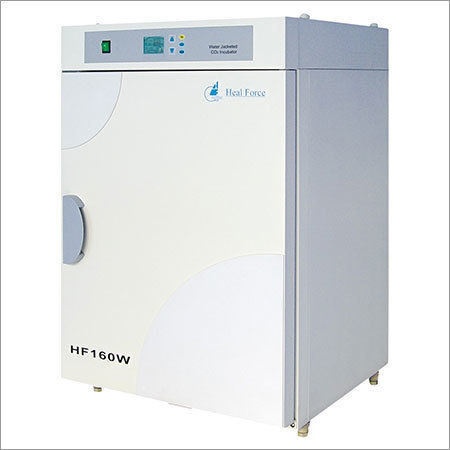
Lab CO2 Incubator
Price 15000-400000 INR / Unit
Minimum Order Quantity : 1 Unit
Equipment Materials : Powder Coated Mild Steel and Stainless Steel (Inner Chamber)
Material : Stainless Steel (Inner), Powder Coated MS (Outer)
Power Supply : Single Phase
Capacity (Ltr) : 160 Ltr
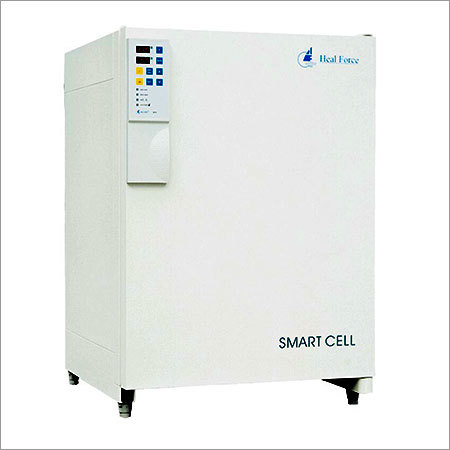
Laboratory CO2 Incubator
Price 15000-400000 INR / Unit
Minimum Order Quantity : 1 Unit
Equipment Materials : Stainless Steel Chamber, Powder Coated Exterior
Material : Highgrade Stainless Steel
Power Supply : 220V Single Phase
Capacity (Ltr) : 160 L


 Send Inquiry
Our Products

121/115, Maharashtra Sadan, Hindustan Chowk, Mulund Colony, Mulund West,Mumbai - 400082, Maharashtra, India

Mr Kaustubh Deshmukh
(Proprietor)
Mobile :08045815294
 Send Inquiry
 Send SMS
Developed and Managed by Infocom Network Private Limited.
